

The Fourteen Root Downfalls of Vajrayāna
The Fourteen Root Downfalls of Vajrayāna (Explained from the perspective of actual practice)
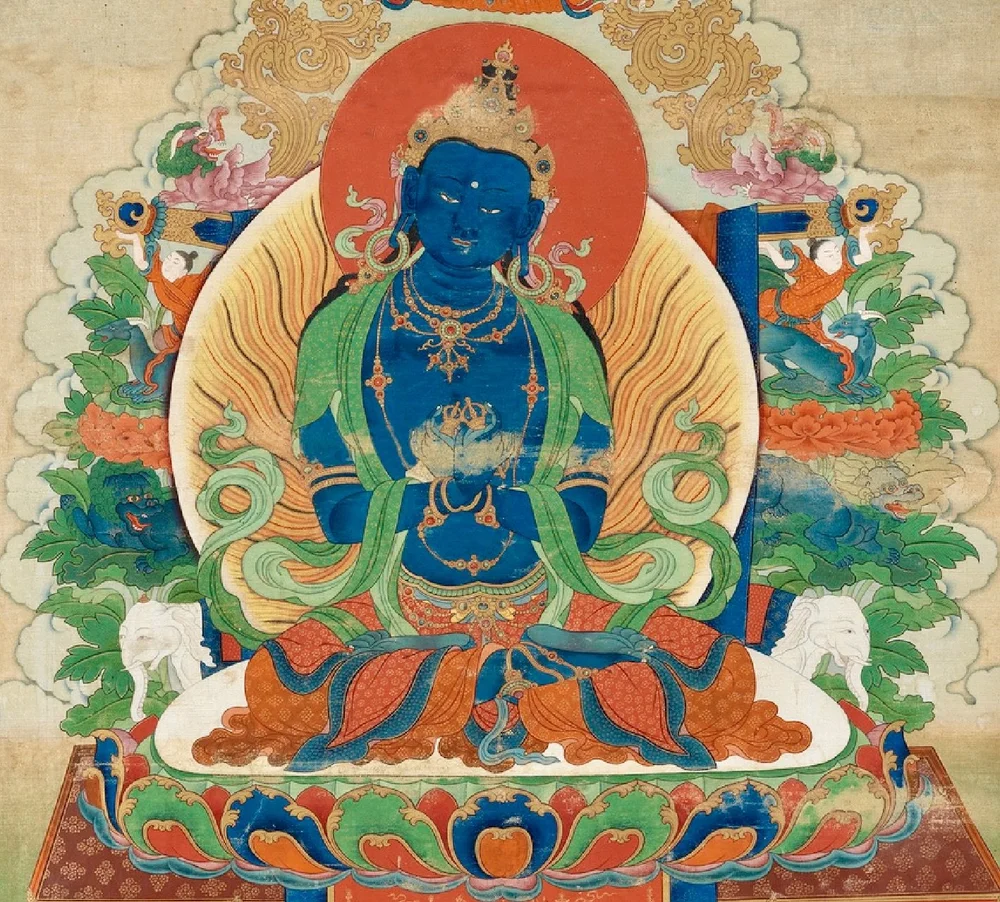
At the level of actual Vajrayāna practice, nothing is more critical than the Fourteen Root Downfalls of the Vajrayāna.
They are listed in a specific order of gravity:
The first is more serious than the second, the second more serious than the third, and so on.
A Vajrayāna practitioner should rely upon these fourteen root vows and guard them with utmost care, to the best of one’s ability.
1. Disrespecting, Abandoning, or Slandering the Guru
The first root downfall is disrespect toward the Guru in body, speech, or mind.
Before accepting someone as one’s Guru, it is entirely appropriate—and even necessary—to examine carefully whether that person is trustworthy and qualified.
However, once the Guru–disciple relationship has been established, the only correct attitude is complete faith.
Whether or not the Guru is personally liberated, the disciple must regard the Guru as equal to the fully enlightened Buddhas.
If negative thoughts arise toward the Guru, or if one criticizes, insults, or disparages the Guru, this constitutes a violation of the first and most serious root downfall.
The Guru is the supreme field for the accumulation of merit and realization.
Through sincere faith and heartfelt supplication to the Guru, immeasurable merit can be gathered.
In Vajrayāna, once a disciple establishes a genuine relationship with a qualified Guru, the disciple must maintain unwavering conviction that the Guru is fully enlightened.
With this faith, the blessings received are no different from meeting the Buddhas themselves.
A historical example illustrates this truth clearly:
During the time of the 27th Drikung Kagyu throne holder, Kyönchok Tenpa Trinlé (1724–1766), there lived a Dzogchen practitioner named Dzogchen Dönrab Khyabzang.
While on pilgrimage, he overheard two people discussing who the true emanation of Guru Padmasambhava was in that era. One replied, “It is Kyönchok Tenpa Trinlé.”
Upon merely hearing the name, Dzogchen Dönrab Khyabzang experienced an overwhelming, indescribable faith—his hair stood on end.
Immediately, he sought out the Drikung throne holder, became his disciple, and entered strict retreat with great diligence.
Later, he developed a mysterious illness in which his limbs became completely contracted and immobile.
One night, with utmost sincerity, he prayed fervently to his Guru. Suddenly, the Guru appeared vividly before him. Overcome with devotion, tears streamed down his face.
What felt like a brief moment was, in fact, several hours.
When morning birdsong awakened him from samadhi, the vision dissolved—and he discovered that his illness had completely vanished.
Soon after, he attained realization of Mahamudra and became a renowned accomplished master.
This story demonstrates the inconceivable power of a disciple’s faith, capable of leading directly to ultimate realization.
2. Rejecting the Teachings of the Buddha or the Guru
The second root downfall is denying, rejecting, or disparaging the Buddha’s teachings, or the specific instructions received from one’s Guru.
For this reason, when I teach as a Guru, I encourage disciples to practice only what they are genuinely capable of, and to avoid harmful actions.
I do not wish to place disciples in impossible situations that would cause them to violate their vows.
Each person should do their best, according to their capacity.
3. Creating Conflict Among Vajra Siblings
The third root downfall is creating conflict among Vajra brothers and sisters.
Those who share the same Guru or who have received empowerment within the same mandala are bound by samaya as spiritual siblings.
Arguments, hostility, fighting, or rivalry among them constitute a serious violation.
Although all sentient beings are, in a broad sense, our siblings, Vajrayāna practitioners who share the same Guru are especially close, sharing the same spiritual father—or even the same spiritual parents in the case of shared empowerment.
4. Abandoning Compassion for Sentient Beings
The fourth root downfall is losing compassion and giving rise to harmful intent toward sentient beings.
This violates not only Vajrayāna samaya but also the Bodhisattva vows.
The First Four Root Downfalls
The first four root downfalls are the most decisive and severe:
• Disrespecting the Guru
• Disobeying the Guru’s instructions
• Creating conflict among Vajra siblings
• Violating compassion and Bodhisattva conduct
Any one of these constitutes a grave breach of Vajrayāna samaya.
5. Abandoning Bodhicitta Due to Fear or Laziness
This includes abandoning:
• Relative bodhicitta (aspiration and action)
• Subtle bodhicitta
• Luminous emptiness bodhicitta
Due to greed, anger, or ignorance, abandoning the Mahāyāna path violates the fifth root downfall.
6. Disparaging One’s Own or Other Traditions
Criticizing other Buddhist schools—or even other religions—based on one’s limited understanding constitutes this downfall.
Vajrayāna requires respect not only for all Buddhist traditions, but also for other spiritual paths.
7. Teaching Secret Dharma to the Unprepared
Revealing Vajrayāna teachings to those who are unprepared, unwilling, or openly hostile violates this vow.
8. Despising the Five Aggregates as Impure
Viewing one’s body and mind as inherently impure or worthless violates Vajrayāna view.
In Vajrayāna:
• All forms are deity forms
• All sounds are mantra
• All thoughts are Mahamudra
To deny this sacred potential is a root downfall.
9. Doubting the Pure Nature of Reality
Doubting the validity or efficacy of Vajrayāna practice—thinking it may be useless or a waste of time—undermines the path itself.
10. Failing to Act from Great Compassion When Necessary
In extremely rare cases, great compassion may require decisive action to prevent immense harm.
If someone capable of such compassionate intervention refuses out of attachment or fear, this constitutes the tenth root downfall.
11. Falling into Eternalism or Nihilism
Believing phenomena are inherently real (eternalism), or denying cause and effect through misunderstanding emptiness (nihilism), violates correct Vajrayāna view.
12. Turning Away Sincere Seekers
Rejecting sincere students who come with genuine faith and readiness—when one is able to guide them—is a violation of samaya.
13. Rejecting Samaya in Vajrayāna Ritual Practice
Clinging to ordinary concepts of purity and impurity—such as rejecting ritual substances without understanding their transformative purpose—violates Vajrayāna spirit.
14. Disparaging the Wisdom Nature of Women
Viewing women as inferior in mind or speech violates the fourteenth root downfall.
Wisdom itself is symbolized through the feminine principle.
Conclusion: The Essence of Vajrayāna Samaya
From a positive perspective, the purpose of these vows is to bring body, speech, and mind into sacred alignment:
• One’s body becomes inseparable from the deity
• One’s speech becomes inseparable from mantra
• One’s mind becomes inseparable from samadhi
When body, speech, and mind are fully integrated in this way, even countless samaya vows are naturally upheld.
This is the heart of Vajrayāna practice.